
Apply to Medicine Programme

Apply to medicine with a plan for the whole year

A live online programme for students applying to UK medical schools for 2028 entry. Ten evening sessions with practising doctors and current medical students, each one timed to the stage you are at, plus individual feedback on your personal statement and a mock MMI circuit.

From the founders of PME, who have taught thousands of medical students over the years.

Your admissions year, February to December 2027
  1. February to March 2027Module 1: Choosing medicine and choosing schools
  2. April to May 2027Module 2: Work experience, volunteering and your CV
  3. June to July 2027Module 3: The UCAT
  4. July to September (expected)UCAT testing
  5. August to September 2027Module 4: Your UCAS application
  6. October to December 2027Module 5: Interviews
  7. Mid-OctoberUCAS deadline
  8. From November, to March 2028Interviews

Interview Intensive for 2027 entry

Applied to medicine by 15 October 2026? The interview module runs early for this year's applicants: four live sessions on Wednesday 2, Thursday 3, Wednesday 9 and Thursday 10 December, then a six-station mock MMI circuit with individual feedback on Saturday 12 December, where each student books a one-hour slot between 10:00 and 14:00 UK time. Start with the free taster session on Wednesday 18 November.

Evening sessions at 18:00 UK time (22:00 UAE); the mock circuit runs 10:00 to 14:00 UK (14:00 to 18:00 UAE), with more slots added if numbers need them. Fee £495; the taster session is free.

Register interest in the Interview Intensive

The programme

Five modules of two live sessions, each module running in the months it matters, with individual feedback on your personal statement and a mock MMI circuit. Open a module to see its sessions.

Module 1Choosing medicine and choosing schoolsFebruary to March 2027
  1. A life in medicine, and how UK admissions work

    Training from medical school to consultant or GP, then UCAS, the UCAT, academic requirements, contextual offers, graduate entry and applying from outside the UK.

  2. Picking your four schools and planning your year

    Course styles and how each school weighs grades, the UCAT, your statement and the interview. You leave with a month-by-month plan built around your own schools.

Module 2Work experience, volunteering and your CVApril to May 2027
  1. What medical schools mean by work experience

    What the Medical Schools Council's guidance asks for, why months of volunteering or caring beat a one-week placement, and the reflective log you keep all year.

  2. Maximising your CV

    Leadership, teamwork, an EPQ, essay competitions and wider reading, and the values medical schools select for, without box-ticking.

Module 3The UCATJune to July 2027
  1. How the UCAT works: Verbal Reasoning and Decision Making

    The four sections, how scoring works and how your schools use it, then methods for both sections, worked through timed questions together.

  2. Quantitative Reasoning, Situational Judgement and test day

    Fast arithmetic and the shortcuts that save seconds, thinking like a doctor when the answer is a judgement call, and a revision plan for the summer.

Module 4Your UCAS applicationAugust to September 2027
  1. The new personal statement

    UCAS's three questions and the 4,000-character limit, how admissions tutors read them, and writing about motivation without the lines every tutor has read a thousand times.

  2. Case examples and the rest of the form

    Strong and weak statements annotated line by line, then references, predicted grades, the October deadline and the final checks.

Plus written feedback on a draft of your own personal statement.

Module 5InterviewsOctober to December 2027
  1. MMI and panel interviews, and medical ethics

    Which schools use which format and how stations are marked, then consent, confidentiality, capacity and fairness, worked through real-style cases.

  2. The NHS, role play and teamwork stations

    Medicine in the news without reciting headlines, and practice for the stations that are hardest to prepare for alone.

Plus a mock MMI circuit with individual feedback.

25,770 people applied to study medicine in the UK for 2026 entry, each choosing up to four medical schools. Source: UCAS, 29 October 2025.

Three doctors in white coats reviewing notes at a table

How it works

Taught live
Every session is taught live online by practising doctors or current medical students, at 18:00 UK time (21:00 or 22:00 in the Gulf). You can ask questions in every one.
Recordings
Miss a session and the recording is there the next day.
Individual feedback
Written feedback on a draft of your personal statement, and a mock MMI circuit with individual feedback before your interviews.
Practice between sessions
Short questions after each session, and UCAT question sets in the UCAT module.
Certificate
A certificate of completion. It is not a qualification and carries no UCAS tariff points.

A station like the ones you will practise

Multiple mini interviews (MMIs) start with a card on the door. Here is one, and what the interviewers inside are listening for.

Station 4: ethics

Reading time 2 minutes. Station 7 minutes.

You are a junior doctor on a medical ward. Mr Rahman, 78, has just been diagnosed with lung cancer. Before you see him, his daughter stops you in the corridor. “Please don’t tell him,” she says. “It would destroy him. In our family we don’t talk about these things.” The interviewer will play the daughter. Talk to her.
What the interviewers are listening for

  • Kindness towards the daughter, and curiosity about why she is frightened
  • That Mr Rahman has the right to know about his own diagnosis, and to decide how much he wants to hear
  • Asking him, sensitively, how much he wants to know and who he wants involved
  • Respect for the family's culture without assuming what Mr Rahman himself believes
  • Not sharing his details with her without his agreement
  • Knowing when to involve a senior colleague, and not promising what you cannot do

Who teaches it

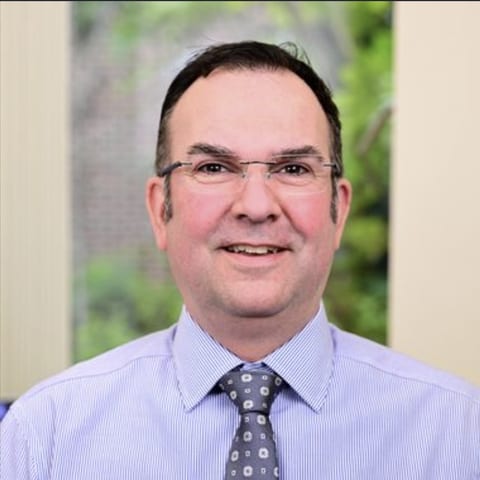
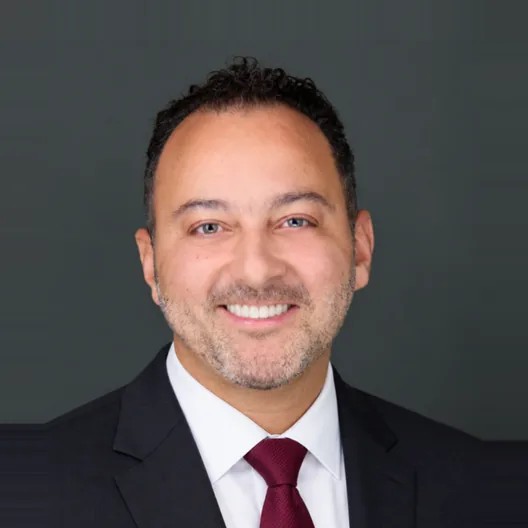
Led by Tom Cosker and Sherief Elsayed, who founded Professional Medical Education (PME) in 2006 and have taught thousands of medical students over the years. Consultants, GPs and doctors in training join them on the faculty, and current medical students, who sat the UCAT and wrote their statements recently, lead some sessions.

Professor Tom Cosker

Professor Tom Cosker

Course Director

Consultant Orthopaedic Surgeon at the Nuffield Orthopaedic Centre, Oxford. Associate Professor and Director of Surgical Anatomy at the University of Oxford, and Anatomy tutor at Balliol College, where he teaches Oxford medical students. College Assessor for the Royal College of Surgeons of England.

Mr Sherief Elsayed

Mr Sherief Elsayed

Course Director

UK-trained Consultant Spinal Surgeon (FRCS Tr & Orth). Former Lead Clinician for Spinal Surgery at Brighton and Sussex University Hospitals, International Editor of Miller's Review of Orthopaedics, and co-founder of PM Diplomas and NSpine.

For parents

It will not get anyone in by itself

Medical schools select students, not the courses they have paid for, and we advise against listing this programme on a UCAS application. What it gives your child is a plan, honest feedback and doctors they can question.

Safeguarding

Teaching sessions are webinars: students' cameras and microphones stay off and questions go through a moderated chat. Mock interviews run in small groups with two faculty members present. Every teacher is DBS checked.

Fee support

Places with full or partial fee support for students who meet widening participation criteria, such as free school meals or being the first in the family to go to university.

Applying from abroad

The programme covers international applicants: places, fees, entry requirements, sitting the UCAT outside the UK and interviewing online.

Questions

Who is it for?

Students applying to UK medical schools in October 2027 for 2028 entry: Year 12 in England and Wales, S5 in Scotland, Year 13 in Northern Ireland, and the equivalent year for international students. Gap-year and graduate applicants are welcome too.

I applied this October. Is it too late?

Not for interviews. The Interview Intensive runs the interview module early, from 2 to 12 December 2026, for students applying for 2027 entry: four evening sessions and an online mock MMI circuit on Saturday 12 December, with a free taster session on Wednesday 18 November.

Do I have to attend live?

Live is best, because you can ask questions. Every session is recorded, so a missed week can be caught up.

How much does it cost?

The full programme is £940 and the Interview Intensive £495. Places with full or partial fee support are available for students who meet widening participation criteria.

Does the programme count towards my application?

No. It is a preparation course, not a qualification, and carries no UCAS tariff points. Use what you learn; do not list the course itself.

Is it connected to UCAS, the UCAT or a medical school?

No. It is independent, and not affiliated with or endorsed by UCAS, the UCAT Consortium, the Medical Schools Council or any medical school.

Does it cover graduate entry?

The first session covers graduate-entry routes and the admissions tests they use. Most of the programme applies to every applicant.

Register interest

Email us and we will send you the details as soon as enrolment opens, including how to join the free taster session on Wednesday 18 November. We only contact you about this course.

Tell us four things

  • Your name
  • Whether you are a student, a parent or guardian, or a teacher or adviser
  • Which year you are applying for
  • The country you live in
Email to register interest

Or write to info@pmdiplomas.com

Students under 16: please ask a parent or guardian to email for you.